
How Often Should I Get a Ceramic Coating for My Car?
Modern automotive paint protection has evolved significantly, with ceramic coatings now serving as the industry standard for long-term vehicle preservation. According to recent automotive care industry reports, vehicles with professional-grade ceramic coatings retain their resale value up to 15 percent higher than untreated counterparts due to sustained paint integrity. This statistic highlights why understanding the maintenance lifecycle of these coatings is critical for any vehicle owner in Tampa, Florida. The humid, salty air of the Gulf Coast accelerates environmental degradation, making the question of frequency not just a matter of aesthetics, but of structural paint protection. (Auto Detailing Services Auto)
What Is Ceramic Coating?
Before determining how often you need a new application, it is essential to understand the chemistry at play. Ceramic coating is a liquid polymer that bonds with the vehicle's exterior to create a permanent or semi-permanent layer of protection. Unlike traditional waxes that sit on top of the paint and wash away quickly, ceramic coatings chemically fuse with the clear coat. (Auto Detailing Services Auto)
This bond creates a hydrophobic surface that repels water, dirt, and contaminants. The result is a vehicle that stays cleaner longer and requires less frequent washing. However, this does not mean the coating is indestructible. Environmental factors, such as UV radiation and acid rain, will slowly break down the chemical bonds over time. Understanding this degradation process is the first step in maintaining your vehicle's showroom finish.
Factors Influencing Coating Lifespan
There is no single answer to how often you should get a ceramic coating because the lifespan varies based on several dynamic variables. The durability of the coating depends heavily on the quality of the product used, the preparation of the paint, and the environmental conditions of the storage location.
Environmental Exposure
Tampa, Florida, presents a unique challenge for automotive paint. The intense UV index and high humidity levels accelerate the oxidation process. UV radiation is the primary enemy of ceramic coatings, breaking down the silicon dioxide bonds that provide hardness and gloss. Vehicles parked outdoors in direct sunlight will experience faster degradation than those kept in garages. Additionally, road salt and coastal salt air can etch into the coating if not regularly removed, reducing its effective lifespan.
Product Quality and Application
The tier of ceramic coating applied matters significantly. Consumer-grade kits found at auto parts stores typically last six to twelve months. Professional-grade coatings, such as those used by certified detailers, can last two to five years or more. The preparation of the paint before application is equally critical. If the paint is not perfectly corrected and decontaminated before the coating is applied, the coating will fail prematurely due to trapped contaminants.
The Maintenance Schedule
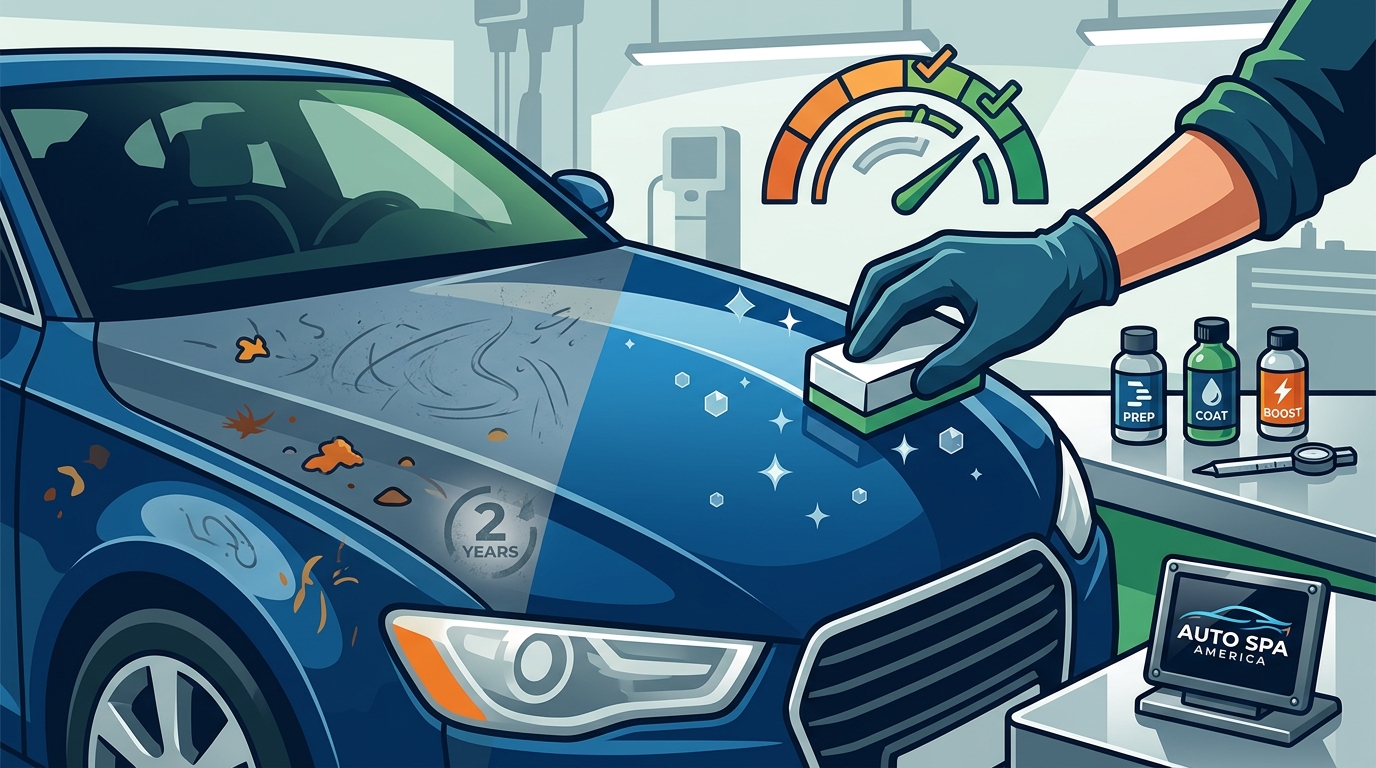
While the coating itself may last for years, it requires regular maintenance to perform optimally. Neglecting maintenance can reduce the lifespan of a five-year coating to just two years. The general rule of thumb is to have your coating inspected and maintained every six to twelve months.
This maintenance typically involves a thorough wash followed by the application of a ceramic booster spray. These boosters replenish the hydrophobic properties that wear off over time. At Auto Spa America, we recommend a comprehensive inspection during your regular detailing appointments to assess the coating's health. If the water beading has diminished significantly, it may be time for a refresh or a full reapplication.
Signs Your Coating Is Failing
How do you know when it is time for a new coating? Look for these specific indicators:
- Reduced Hydrophobicity: Water no longer beads up and rolls off quickly. Instead, it sheets or sits on the paint.
- Loss of Gloss: The paint looks dull despite being clean.
- Contamination Buildup: Dirt and grime stick to the surface more aggressively than before.
- Visible Etching: Small spots or stains that do not wash off indicate the coating has been compromised.
Why Auto Spa America Uses System X
At Auto Spa America, we exclusively utilize System X Ceramic Coating for our professional applications. This choice is driven by the rigorous demands of the Florida market. System X coatings are renowned for their high-performance capabilities, offering superior hydrophobic properties that repel water, dirt, and road grime effectively.
Our technicians apply System X Max and Max G+ variants depending on the vehicle's condition and the owner's protection goals. These coatings create a hard, glossy layer that resists UV rays, chemical etching, and environmental contaminants. The durability of System X ensures that your investment is protected for the long term, maintaining its shine for years with proper care.
We constantly monitor the market and adopt the latest, highest-performing brands that are available. This means, from year to year, while you may experience different brands of ceramic coating, you will continually receiving the best products available. Our commitment to using premium products ensures that your vehicle receives the highest level of protection against the harsh Tampa climate.
Coating vs. Wax Comparison
Many vehicle owners confuse ceramic coatings with traditional car wax. While both offer protection, their longevity and performance differ drastically. The table below outlines the key differences to help you decide which service is right for your needs.
| Feature | Ceramic Coating | Traditional Car Wax |
|---|---|---|
| Lifespan | 2 to 5+ Years | 1 to 3 Months |
| Protection Level | High (Chemical Bond) | Low (Physical Layer) |
| Hydrophobic Effect | Extreme Water Beading | Moderate Water Beading |
| UV Resistance | High | Low |
| Maintenance Frequency | Low (Booster Sprays) | High (Regular Reapplication) |
As shown in the data, ceramic coatings offer a significantly longer lifespan and superior protection. For vehicle owners in Tampa, the investment in a professional ceramic coating is often justified by the reduced frequency of detailing and the enhanced protection against environmental damage.
Key Takeaways
- Professional Lifespan: Professional ceramic coatings typically last between two to five years, depending on the product tier and maintenance.
- Environmental Impact: Tampa's UV index and salt air accelerate coating degradation, necessitating more frequent inspections than in milder climates.
- Maintenance Requirement: Regular maintenance with ceramic booster sprays is essential to extend the life of the coating.
- Product Choice: Auto Spa America uses System X Ceramic Coating for its superior durability and hydrophobic properties in Florida conditions.
- Signs of Failure: Reduced water beading and loss of gloss are the primary indicators that a coating needs attention or reapplication.
- Resale Value: Vehicles with maintained ceramic coatings often command higher resale prices due to preserved paint condition.
- Inspection Frequency: We recommend having your coating inspected during every detailing appointment to catch issues early.
Frequently Asked Questions
How long does a ceramic coating last in Florida?
In Florida's humid and sunny climate, professional ceramic coatings typically last between two to five years. The intense UV exposure can break down the coating faster than in cooler climates, making regular maintenance crucial for longevity.
Can I apply ceramic coating myself?
While DIY kits are available, professional application is recommended. Professional detailers like Auto Spa America perform paint correction before application, ensuring the surface is perfectly smooth. This preparation allows the coating to bond correctly and last significantly longer than a DIY application on uncorrected paint.
Does ceramic coating prevent scratches?
Ceramic coating provides some resistance to light swirl marks and scratches, but it is not a substitute for paint protection film (PPF). It primarily protects against chemical etching, UV damage, and environmental contaminants. For maximum scratch protection, consider combining ceramic coating with PPF on high-impact areas.
How often should I wash a car with ceramic coating?
You should wash your car every two weeks to prevent contaminants from bonding to the coating. The hydrophobic properties make washing easier, but regular cleaning is necessary to maintain the coating's effectiveness and appearance.
What is the difference between System X Max and Max G+?
System X Max is a high-gloss, durable coating ideal for standard protection. System X Max G+ offers enhanced gloss and hydrophobic properties, often used for show cars or vehicles requiring maximum visual impact. Both provide excellent protection against UV rays and chemical etching.
Is ceramic coating worth the cost?
For many vehicle owners, yes. The long-term protection reduces the need for frequent waxing and detailing. Additionally, the preserved paint condition can increase the vehicle's resale value. The initial cost is offset by the extended lifespan and reduced maintenance efforts over time.
Can I get a ceramic coating over existing wax?
No. The existing wax must be completely removed before applying a ceramic coating. If wax remains, the coating will not bond properly to the paint, leading to premature failure and uneven appearance. Our team ensures thorough decontamination before any application.
Book Your Ceramic Coating Service
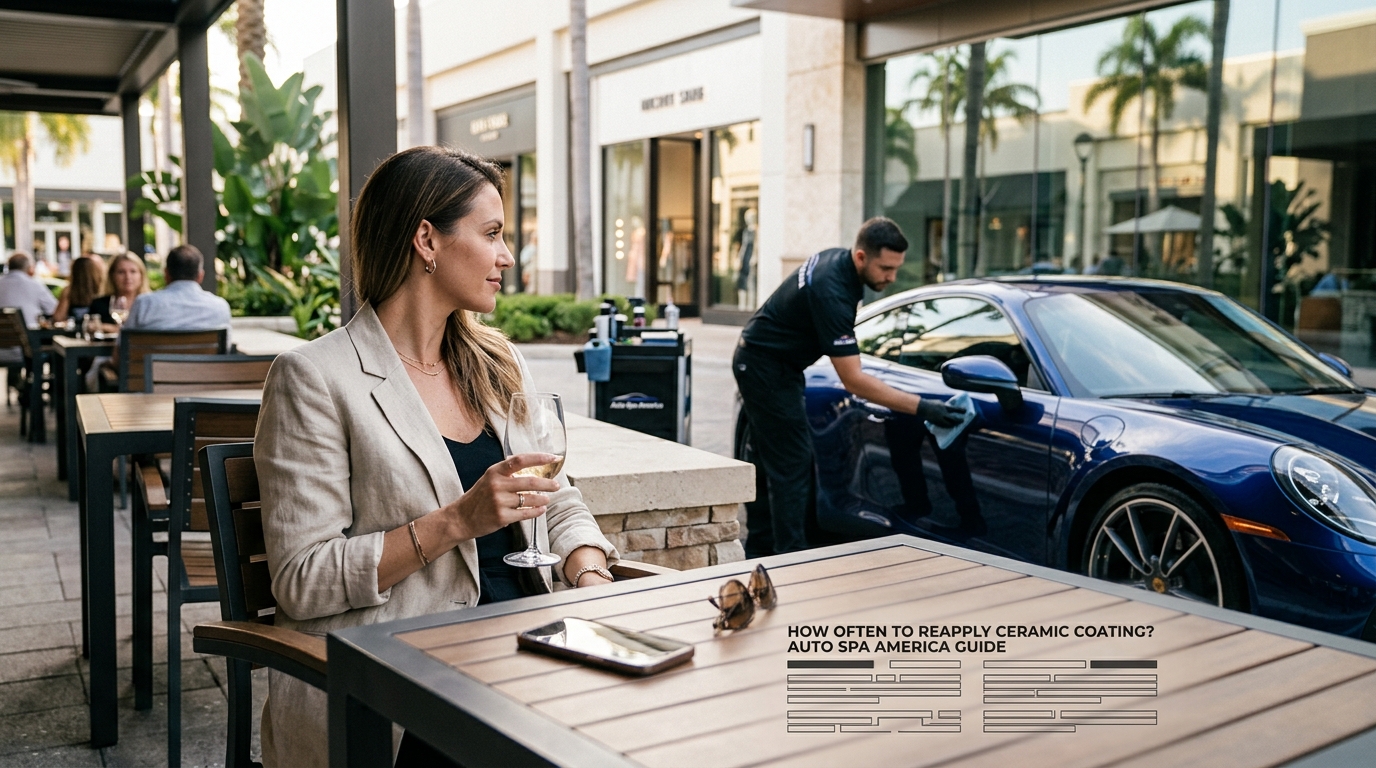
Protecting your vehicle's paint is an investment in its longevity and value. At Auto Spa America, we provide expert ceramic coating services using the highest-quality products available. Located conveniently under the Cheesecake Factory at Tampa International Mall, we make it easy for you to drop off your car and enjoy your day while we work.
Do not wait for your paint to degrade. Contact us today to schedule your ceramic coating consultation. Visit our services page to learn more about our detailing packages. You can also check our portfolio to see the results of our previous work. For more information about our company history, visit our about page. If you have specific questions, please review our frequently asked questions. To get directions to our location at 2223 N Westshore Blvd, Tampa, FL 33607, click here.