
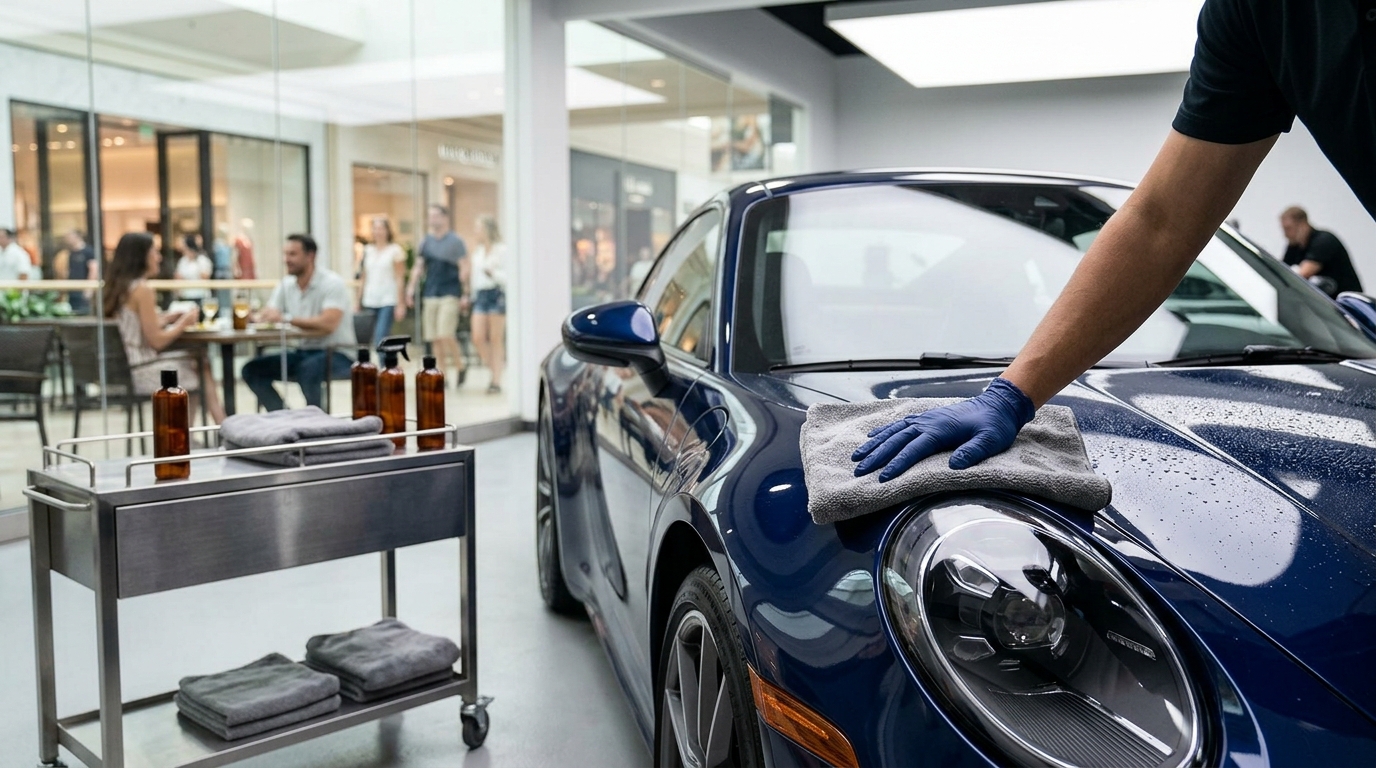
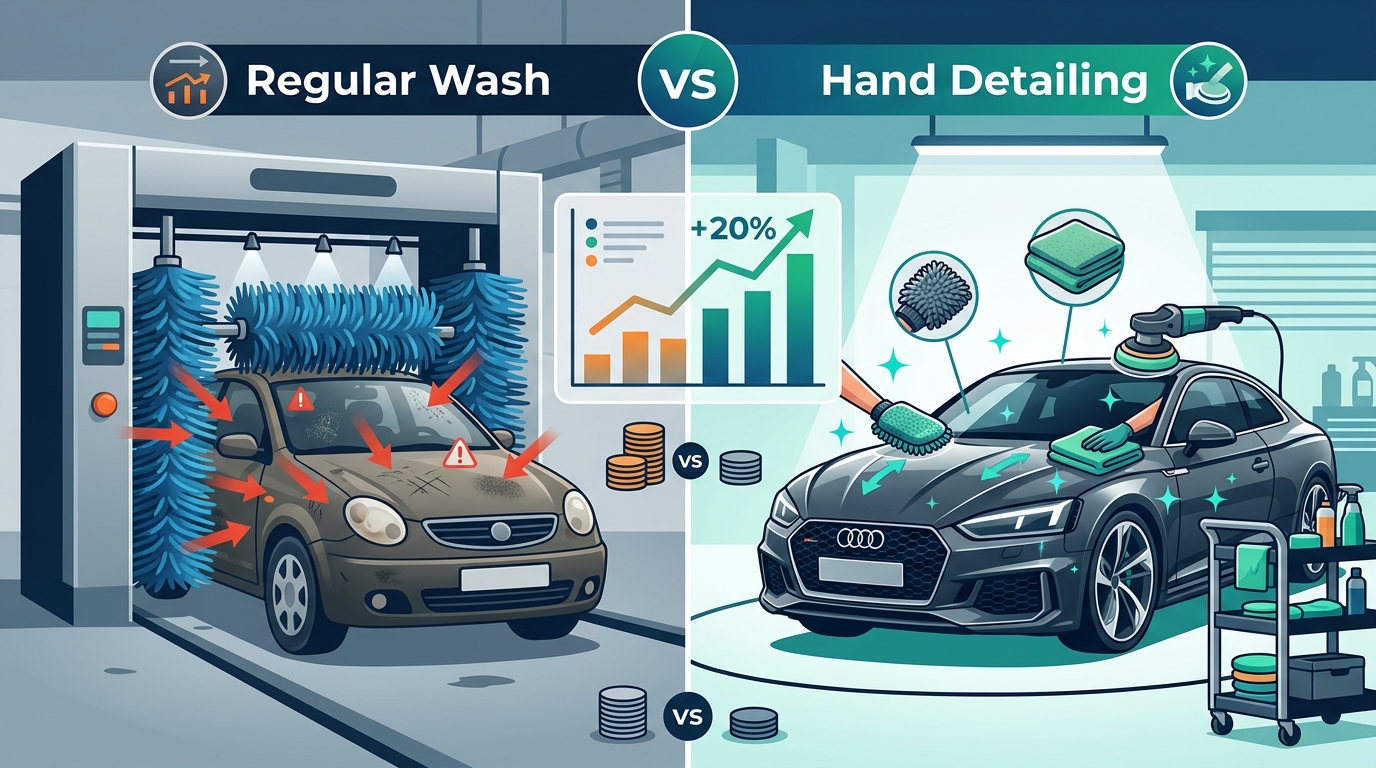
Data shows that modern vehicles require specialized care to maintain resale value and paint integrity. According to industry reports, vehicles receiving professional hand detailing retain up to twenty percent higher market value compared to those subjected to automated tunnel washes. This distinction matters because automated systems often utilize harsh chemicals and abrasive brushes that gradually degrade clear coats. Understanding the operational differences between quick rinses and meticulous hand detailing allows owners to make informed maintenance decisions. Automated equipment frequently traps dirt particles that scratch factory finishes over time. Professional technicians manually inspect each panel to prevent micro-marring and preserve factory gloss. (Auto Detailing Services Auto)
Automated Systems vs Manual Inspection
Automated car wash is a mechanized system that uses conveyor belts, rotating brushes, and high-pressure spray nozzles to clean vehicle exteriors without human intervention. These facilities prioritize speed over precision. Drivers typically experience a three to five minute cycle that forces water through fixed nozzles. The process rarely addresses wheel wells, door jambs, or emblems. Dirt accumulates in these blind spots and eventually migrates to the paint surface. Hand detailing eliminates these blind spots entirely. Technicians inspect every panel under controlled lighting to identify embedded contaminants. This manual approach prevents cross-contamination and ensures consistent coverage across complex body lines.
Brush Friction and Clear Coat Damage
Rotating bristles in automated bays trap sand and road debris between each vehicle cycle. This trapped grit acts like sandpaper against factory paint. Clear coat degradation is the gradual breakdown of the transparent protective polymer layer on automotive paint, typically caused by abrasive friction and harsh chemical exposure. Repeated exposure creates visible swirl marks that dull the original finish. Manual technicians use the two-bucket method to rinse mitts frequently. This technique isolates dirt from clean water and protects delicate surfaces.
Chemical Formulations and Paint Safety
Automated facilities rely on bulk chemical dispensers that prioritize cost efficiency over material compatibility. These solutions often contain high alkalinity levels that strip factory waxes and sealants. Repeated applications leave paint porous and vulnerable to oxidation. Professional detailers select pH-balanced cleaners that lift grime without compromising protective coatings. Auto Spa America exclusively features Car Candy products to maintain optimal chemical balance. This Florida-based manufacturer formulates solutions that enhance gloss while protecting delicate trim. Customers benefit from specialized formulations that adapt to different paint types without causing hazing or etching.
Interior Material Compatibility
Automated systems rarely address cabin environments. Dust, allergens, and spilled beverages accumulate on upholstery and dashboard surfaces. Professional technicians apply material-specific cleaners to leather, vinyl, and fabric substrates. These solutions prevent cracking and fading while preserving factory textures. Regular maintenance prevents deep staining and extends the lifespan of interior components.
Time Investment and Labor Intensity
Automated tunnels operate on fixed schedules to maximize throughput. Drivers accept the time constraints in exchange for convenience. Professional detailing requires dedicated hours to complete each task thoroughly. Technicians follow a strict sequence that begins with pre-rinsing and progresses to mechanical decontamination. This methodical approach ensures no step is skipped. Customers at Auto Spa America drop vehicles at the parking garage entrance underneath The Cheesecake Factory in International Plaza and Bay Street. Staff members handle every vehicle with priority scheduling. The facility remains available seven days a week to accommodate busy schedules.
Step-by-Step Execution Protocols
Each detailing cycle follows a precise workflow that prioritizes safety and consistency. Technicians begin by pressure washing lower panels to remove heavy debris. They then apply foam cannons to lift surface dirt without direct contact. Mechanical agitation follows using premium microfiber mitts that trap particles rather than dragging them. Final stages involve drying with forced air and hand towels to prevent water spotting. This structured approach guarantees repeatable results across all vehicle classes.
Surface Preparation and Clay Bar Processes
Automated washes cannot remove bonded contaminants that adhere to factory paint. Industrial fallout, tree sap, and brake dust embed themselves into microscopic pores over time. These particles create a rough texture that standard water pressure cannot dislodge. Professional detailers utilize clay bar treatments to mechanically lift embedded debris. Technicians glide lubricated clay across panels to extract contaminants without scratching the surface. This preparation step creates a perfectly smooth canvas for wax or sealant application. Hand detailing is a meticulous, manual cleaning process that utilizes specialized microfiber towels, pH-balanced solutions, and technician expertise to restore factory finishes.
Paint Correction and Gloss Enhancement
Surface preparation directly influences final gloss levels. Rough paint reflects light unevenly and appears dull despite regular washing. Clay treatment restores optical clarity by eliminating microscopic bumps. Technicians then apply hand buffed cream wax to lock in protection. This multi-step process delivers showroom results that automated systems cannot replicate. Customers consistently report improved visual depth and hydrophobic water beading after treatment.
Long-Term Value Preservation Strategies
Vehicles subjected to automated washes require frequent repainting or correction to maintain original aesthetics. Clear coat failure accelerates when abrasive brushes remove factory protection repeatedly. Professional maintenance extends the lifespan of exterior finishes by years. Regular hand detailing preserves resale value by maintaining documented service history. Buyers recognize well-maintained exteriors and reward them with premium pricing. Auto Spa America tracks service intervals to recommend optimal maintenance schedules. This proactive approach prevents costly paint repairs and preserves original equipment manufacturer specifications.
Interior Preservation and Odor Elimination
Interior degradation follows similar patterns to exterior neglect. Sun exposure, frequent use, and spilled liquids damage cabin materials over time. Professional technicians apply UV inhibitors to dashboards and trim pieces. These products prevent cracking and fading while maintaining factory flexibility. Deep extraction cleaning removes allergens and bacteria from carpet fibers. The result is a cabin environment that feels fresh and looks factory-fresh.
Service Tier Comparisons and Pricing Models
Automated facilities charge flat rates regardless of vehicle size or condition. Professional detailers adjust pricing based on labor requirements and material costs. Auto Spa America structures service tiers to match specific customer needs. The Interior Plus Exterior package costs sixty dollars and includes full vacuuming, window cleaning, door jambs, and dashboard wiping. The Ultimate Interior package reaches one hundred twenty-five dollars and adds shampoo extraction and leather treatments. The Ultimate Exterior package costs one hundred fifty dollars and incorporates hand buffed cream wax plus clay bar preparation. Each tier delivers measurable value through transparent pricing and documented results.
| Service Tier | Core Inclusions | Target Audience | Investment |
|---|---|---|---|
| Interior Plus Exterior | Full vacuum, window cleaning, door jambs, dashboard wipe | Weekly commuters seeking basic maintenance | $60 |
| Ultimate Interior | Full vacuum, shampoo extraction, leather and vinyl treatments | Families requiring deep cabin sanitation | $125 |
| Ultimate Exterior | Interior cleanup, hand buffed cream wax, clay bar preparation | Enthusiasts pursuing showroom-grade gloss | $150 |
Key Takeaways
- Automated systems utilize abrasive brushes that accelerate clear coat degradation over time.
- Professional technicians manually inspect every panel to prevent cross-contamination and micro-marring.
- Car Candy formulations provide pH-balanced cleaning that protects factory waxes and sealants.
- Clay bar treatments remove bonded contaminants that standard water pressure cannot dislodge.
- Auto Spa America operates seven days a week at 2223 N Westshore Blvd, Tampa, FL 33607.
- Service tiers range from sixty dollars to one hundred fifty dollars based on labor intensity.
- Vehicles receiving professional hand detailing retain up to twenty percent higher market value.
Frequently Asked Questions
Does automated washing damage factory paint?
Rotating brushes trap road debris that acts like sandpaper against clear coats. Repeated cycles create visible swirl marks and accelerate polymer breakdown. Professional hand detailing eliminates abrasive friction by using isolated microfiber mitts and controlled pressure.
How often should I schedule professional detailing?
Technicians recommend bi-monthly exterior treatments to maintain hydrophobic protection and gloss levels. Interior maintenance should align with seasonal allergen cycles and passenger volume. Consistent scheduling prevents deep staining and preserves resale value.
What makes Car Candy products different from standard cleaners?
Florida-based manufacturers formulate solutions that balance pH levels for modern paint systems. These products enhance optical clarity without stripping factory waxes. Auto Spa America exclusively utilizes these formulations to guarantee safe results across all vehicle finishes.
Can hand detailing remove embedded brake dust and industrial fallout?
Standard water pressure cannot dislodge bonded contaminants from microscopic paint pores. Clay bar treatments mechanically lift debris while technicians apply lubricating sprays. This process restores smoothness and prepares surfaces for long-lasting wax protection.
Is professional detailing worth the investment compared to automated options?
Vehicles receiving professional hand detailing retain up to twenty percent higher market value according to industry reports. Extended clear coat lifespan reduces repainting frequency and preserves original equipment specifications. Documented maintenance history appeals to secondary buyers and auction evaluators.
How long does a complete detailing cycle take?
Technicians allocate three to five hours for comprehensive exterior and interior restoration. This timeframe allows proper drying, mechanical decontamination, and wax curing. Customers can utilize the International Plaza shopping district while staff members complete each task.
What areas does Auto Spa America serve locally?
The facility operates at 2223 N Westshore Blvd, Tampa, FL 33607 near major commercial corridors. Technicians service all vehicle classes including sedans, trucks, and luxury imports. Contact 813-669-3131 to schedule priority appointments or request custom fleet pricing.
Book Your Professional Detailing Appointment
Automated washes prioritize speed while sacrificing long-term paint integrity. Professional hand detailing delivers measurable protection through manual inspection, pH-balanced formulations, and mechanical decontamination. Auto Spa America operates seven days a week to accommodate busy schedules. Visit https://autospaamerica.com to schedule your next service or call 813-669-3131 for immediate assistance. Drop your vehicle at the parking garage entrance underneath The Cheesecake Factory and experience the luxury of showroom-ready results.